How Casino Culture Is Framed in Tiền Giang Stories
Casino culture in Tiền Giang stories reveals how chance is framed through language, leisure and memory, without mistaking a vivid scene for a historical record.
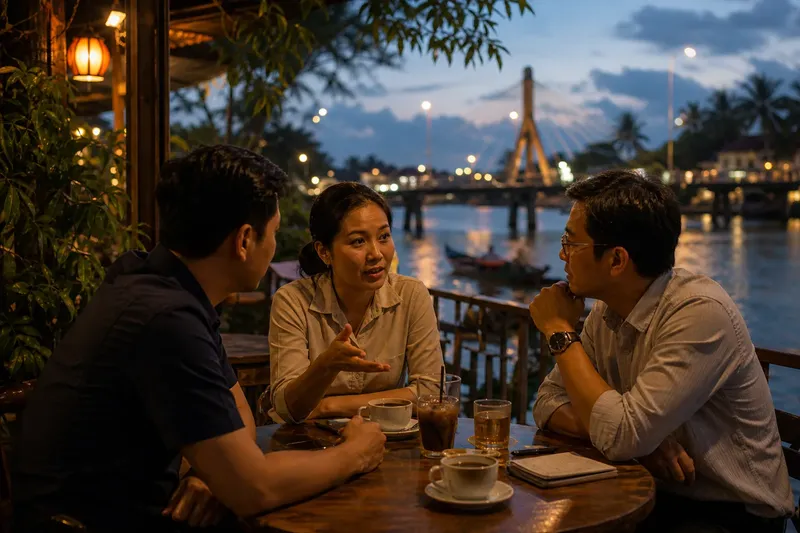
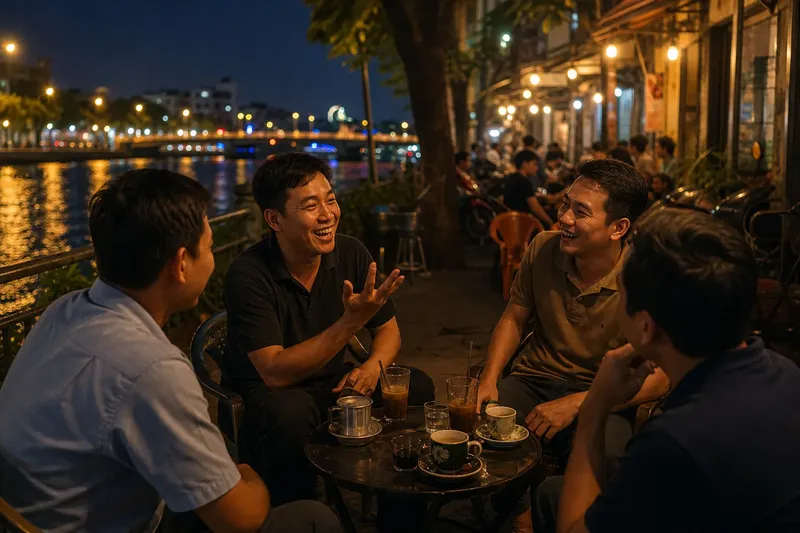
At a riverside tea stall, someone might call a game “just a bit of fun”, while another person remembers the same evening as a test of nerve. That contrast is a useful starting point for reading stories about casino culture in Tiền Giang: the words people choose can reveal how they frame chance, even when they cannot establish what happened.
Historical accounts of leisure are not only about the activity itself. They are also about who gets to describe it, which details are remembered and what a particular story wants its audience to feel. A family recollection, a fictional scene and a public performance each have different strengths—and different limits.
Local words give a game its social meaning
Terms such as “game”, “play”, “wager” or “luck” can place an activity in distinct moral and social registers. “Game” may make it sound companionable; “wager” foregrounds what is at stake; “luck” can make an outcome seem beyond anyone’s control. These are possible readings of language, not fixed definitions shared by every speaker in Tiền Giang.
Pay attention to who uses a term and when. A narrator might soften a story with a casual phrase, then describe a tense silence around the table. That shift can suggest discomfort or a desire to keep the account light. It does not, by itself, tell us how participants understood the event.
Keep the wording intact before interpreting its tone.
Leisure stories reveal what narrators choose to remember
A recollection of a game may dwell on company, food, conversation or the walk home rather than on the play itself. Those details can show what the narrator considers memorable. They may also reflect the occasion on which the story was told: a family conversation, a public event or a later attempt to explain local customs.
Silence matters, too, but it needs careful handling. If an account leaves out who organised a gathering, that omission is a question to pursue, not proof of secrecy. A short memory may simply have a different purpose from a detailed history.
Stories about chance do not form a simple local timeline
It is tempting to arrange accounts into a neat progression: private play first, public entertainment later. But a story told in public can describe a private room, while a family memory can recount an event that was widely discussed. The setting of the story and the setting of the activity are not necessarily the same.
Instead of treating different portrayals as stages, compare what each account foregrounds. One may emphasise trust between familiar people; another may centre on a performer, an audience or a dramatic outcome. That comparison can illuminate storytelling choices without claiming that one kind of leisure replaced another across Tiền Giang.
What can a story about chance tell us?
Does a vivid recollection prove that an event happened exactly as told?
No. It records how a person remembers or presents an event, and memory can be selective. Treat details as the narrator’s account unless they are supported by other suitable evidence.
Can a phrase reveal what people thought about gambling?
It can show how a particular speaker framed an activity in a particular context. Compare the phrase with the surrounding conversation rather than assuming it represents a whole community.
Why do stories make chance sound like fate?
Language about luck or fate can make an uncertain outcome feel meaningful after the event. That framing tells us about the story’s interpretation, not about any force that caused the outcome.
How should conflicting accounts be handled?
Keep each account distinct, noting who made it and what occasion it served. A disagreement may reflect different memories, purposes or points of view; do not smooth it into a single version without grounds.
A source-reading method keeps claims in proportion
When working with a recollection, story, image or performance, note what kind of item it is and what it actually offers. The following checks help turn close reading into a careful description:
- Speaker: Check whether the speaker is named; if so, attribute the account to that person, but do not present it as everyone’s view. If not, identify the speaker as unknown rather than guessing.
- Occasion: Check whether the account says when or why it was made; if the occasion is stated, include it as context, but do not assume the same purpose for other accounts. If it is unstated, mark that uncertainty.
- Wording: Check the exact words used for the activity; if the account says “game”, retain that term before interpreting it, but do not silently replace it with a stronger label. If the wording is unclear, quote only what can be read or heard reliably.
- Setting: Check which place is actually named; if a location is explicit, describe it as the account’s stated setting, but do not infer that the event occurred there without supporting evidence. If no place is named, avoid assigning one.
- Memory: Check whether the account is retrospective; if it is, describe it as a recollection, but do not treat remembered detail as independently confirmed. If the timing is unknown, say so.
- Audience: Check whether the item was made for family, readers, viewers or another audience; if that audience is clear, consider how it shapes the presentation, but do not assume its members agreed. If the audience is unknown, keep the interpretation open.
- Omissions: Check which relevant details are absent; if the account leaves a question unanswered, record the gap, but do not fill it with an invented explanation. If the detail is unnecessary to the claim, leave it aside.
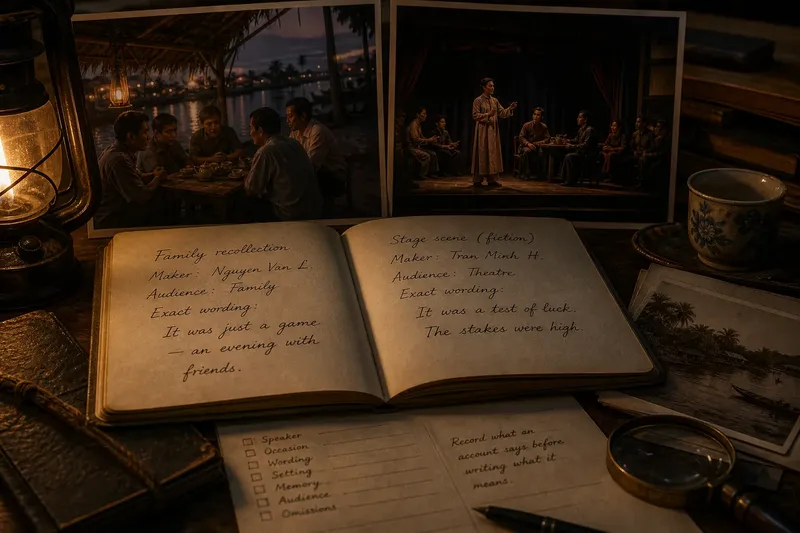
Say you are preparing a small display with two labelled, invented items: a family recollection that calls an evening “a game” and a fictional stage scene that calls it “a test of luck”. You record each item’s maker, stated audience and exact wording, then note that one uses casual language while the other heightens tension. Your resulting caption can say that the two items frame chance differently; it cannot claim that either wording was typical across Tiền Giang.
Write down what an account says before writing down what you think it means.
Keep the story and the historical claim distinct
Casino culture in Tiền Giang is not captured by a single phrase, remembered evening or dramatic scene. Such material can help explain how people narrated leisure, luck and social relationships. To make a broader historical claim, keep the source’s voice and purpose visible, and seek other evidence suited to that claim.
A useful final distinction is simple: a story can be valuable because it shows how chance was described, not because it settles every question about local practice. Let the account speak in its own terms, and let its limits remain part of the history.