Venue, Resort, or Entertainment Space? What These Labels Suggest in Tiền Giang
See how venue, resort and entertainment space frame casino culture in Tiền Giang, and choose wording that makes the activity and speaker’s perspective clear.

A café conversation in Mỹ Tho can turn on a single noun: one person says “venue”, another says “resort”. When discussing casino culture in Tiền Giang, those labels do more than locate a setting; they steer attention towards an event, a stay or leisure in general.
Venue puts the occasion in the foreground
“Venue” is useful when the story centres on a gathering: a performance, meeting or private function. It points readers towards where an event takes place without claiming that the event defines the whole property.
That precision has a limit. The word says little about the activity itself or the people involved. If casino gaming is central to the account, name it rather than expecting “venue” to carry that meaning.
Use “venue” when the occasion is the subject, and explain the activity when readers need more context.
Resort frames a stay as leisure
“Resort” brings hospitality and recreation to mind, often suggesting time set aside for a visit or stay. In writing about Tiền Giang, the word might appear alongside a journey through Mỹ Tho or the Mekong Delta, but it does not tell us how residents, workers or visitors experience a particular place.
It can also place gaming within a wider leisure story. That may suit an account of a planned visit, but it can blur the distinction between gaming, dining, performances and other activities. Say which one matters to the story.
Use “resort” when the subject is the idea of a stay, not as a substitute for naming what happened.
Entertainment space gathers unlike activities under one phrase
“Entertainment space” can encompass socialising, performances and play. Its breadth may be handy when a writer is discussing leisure as a general theme, but it can make distinct activities sound interchangeable.
A show, a meal with friends and casino gaming are different experiences. Name the activity when that difference matters, and describe access only if the relevant details are established. The phrase alone cannot tell readers who attends or what rules apply.
Choose a broad label only when the breadth itself is useful.
How should you choose among these labels?
When does “venue” fit better than “resort”?
Choose “venue” when the sentence is about an event and its setting. Choose “resort” when the account concerns a leisure visit or stay.
Does “resort” mean gaming is the main activity?
No. The word frames a place through hospitality and recreation but does not identify the focus of a particular visit. Name gaming directly if it is what the story discusses.
Who does “entertainment space” include?
The phrase does not establish an audience or access conditions. Identify the people being described only when the account supports that detail.
Can different speakers use different labels for the same place?
Yes: a person arranging an event may say “venue”, while someone talking about a stay may say “resort”. Explain each speaker’s context instead of treating one label as the place’s definitive meaning.
A simple editing pass can make the wording more exact
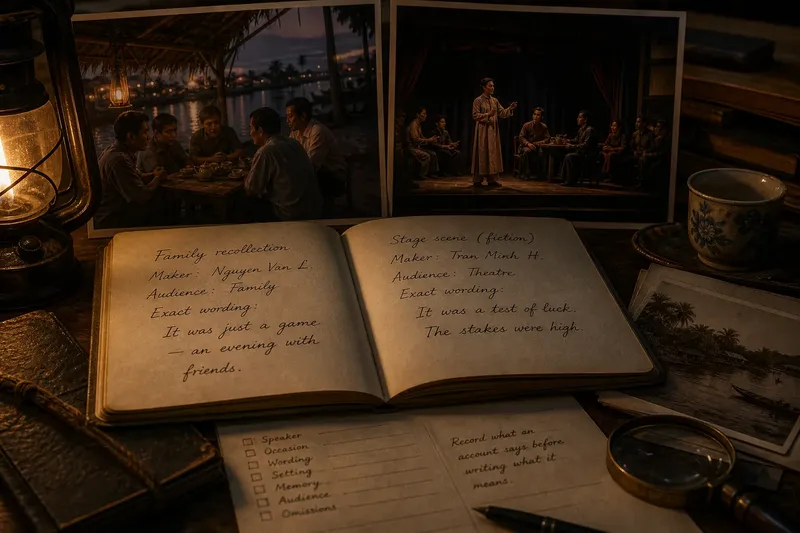
Imagine a fictional conversation in Mỹ Tho about an evening at a property described as having guest rooms, a gaming area and an event hall. One speaker is organising a gathering, another is talking about a weekend stay, and a third is discussing gaming. First, match each speaker’s noun to their subject: “venue” for the gathering, “resort” for the stay and “gaming area” for the activity. Then check that the account identifies whose perspective it presents. The result is clearer wording, not a claim that all three speakers describe the same experience.
When editing a sentence, check the detail and decide what wording follows:
- Check whether an event is the subject. If it is, use “venue” and name the event; if the sentence concerns a stay, use wording that describes the stay instead.
- Check whether the account describes a planned visit or stay. If it does, “resort” may fit; if it concerns one activity, name that activity instead.
- Check what “entertainment” means in the sentence. If the activity is clear, the broad phrase may work; if not, replace it with the specific activity.
- Check whose point of view the wording reflects. If it is a visitor’s account, identify that perspective where relevant; if it concerns workers or residents, name that perspective instead.
- Check whether access conditions matter. If they are established and relevant, state them; if they are unknown, remove wording that implies open access.
- Check whether casino gaming is central. If it is, say so directly; if it is one part of a broader account, explain that relationship instead.
These distinctions help make casino language in Tiền Giang more precise without turning a label into evidence about local habits. For a clear account, name the activity and whose perspective is being described; let the noun do only the work it can support.
In practice, a small edit can change the reader’s focus: replace a broad label with the event, stay or activity actually under discussion. That leaves room for the people in the story to supply its social meaning.