When a Place Name Enters a Casino Story
Learn how to read a casino story set in Tiền Giang by separating the place name from the local context it may leave out.
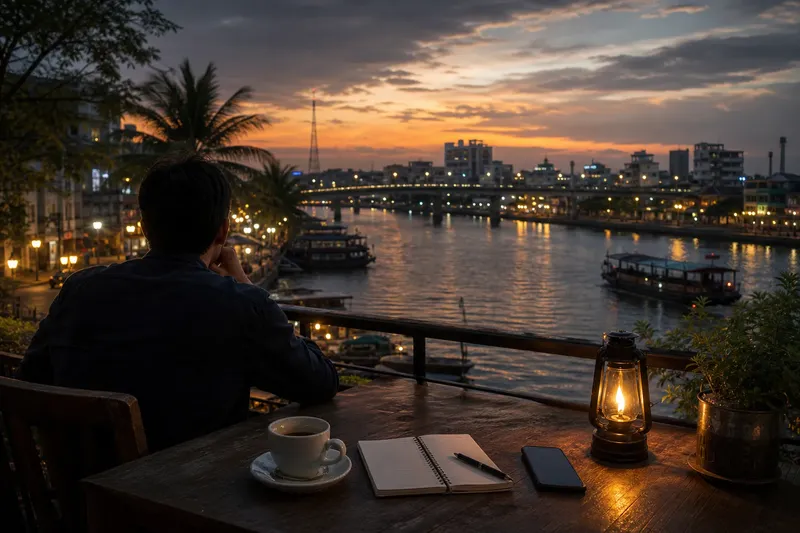
A message arrives with a casino story set in Tiền Giang, and the place name makes it sound close to home. But the post gives no street, venue, date or source. Reading a casino story about Tiền Giang carefully starts with one distinction: a named location can set a scene without explaining what actually happened there.
That gap is easy to miss because place names carry associations. A province, town or riverside setting can make a tale feel local, even when the details are vague or borrowed from somewhere else. Here is how to spot the common snags and decide what to check next.
A familiar name can make a vague story feel local
The first problem is treating recognition as evidence. A story may mention Tiền Giang, Mỹ Tho or the Mekong Delta, then move straight to a dramatic claim about a casino visit. The name anchors the scene in the reader’s imagination, but it does not establish the venue, the people involved or the event.
This usually happens because a location is doing narrative work: it adds atmosphere and gives a story a memorable setting. That can be harmless in fiction or casual conversation. In a factual claim, however, the place name needs support from details that can be checked independently.
Try separating what the story says from what it implies. Write down the named place, the claimed event and the details that connect them. If the only connection is a province name in a caption, treat the local setting as unconfirmed.
Broad geography can blur important distinctions
A second snag is confusing a province, a city, a neighbourhood and a particular venue. “In Tiền Giang” covers far more than one recognisable public space. Even a specific town name may not tell you whether a story concerns a legal business, a private gathering, an online platform or a fictional scene.
The cause is often shorthand. People use a large regional label because it is familiar, or because a retelling has shed the more precise details. A reader then supplies the missing location from memory, which can make an unsupported claim seem more definite than it is.
Ask what kind of place the account actually identifies. A street or district, a named venue, a public event and a digital service are different claims. If the wording leaves those categories blurred, do not fill in the blank yourself.
Anecdotes can travel farther than their context
Stories about chance are especially easy to retell. Someone may describe a lucky evening, a tense loss or an unexpected win, and each repetition can trim away the original setting. By the time a story reaches a group chat, the province name may remain while the date, speaker and source have disappeared.
Imagine a neighbour forwards a voice note saying a visitor “won big at a casino in Mỹ Tho”. The note names no venue and gives no indication of when or where the speaker heard it. You could ask the neighbour whether the speaker is recounting a personal experience, repeating hearsay or telling a made-up story; the answer would clarify the claim’s status, not prove the event occurred.
Keep the wording faithful when you pass the story on. “A voice note claims…” is more accurate than “A casino in Mỹ Tho…” when the location has not been established.
Check the source before filling in the setting
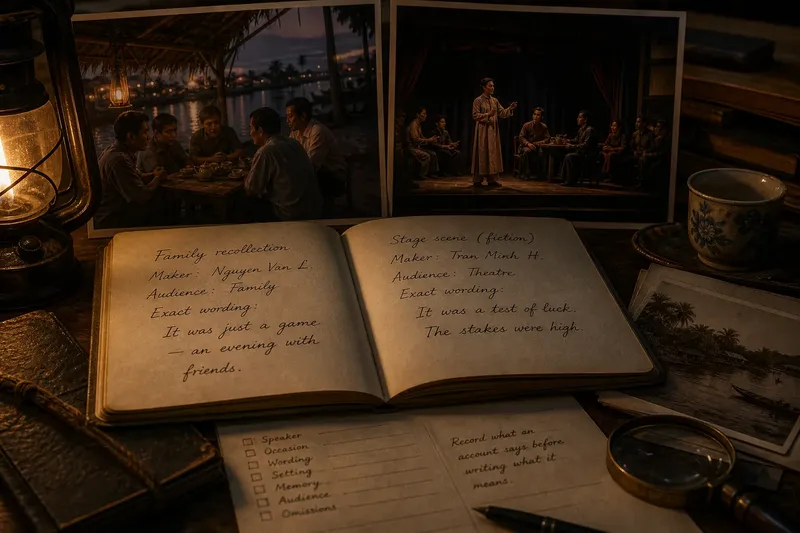
When a location name appears in a factual account, check the surrounding clues in order. Start with the original post or message rather than a screenshot stripped of its caption. Look for a date, a named source and a description precise enough to distinguish a real place from a broad regional reference.
- Source: Is this the original account, or a repost with missing context?
- Place: Does it name a venue or only a province, city or region?
- Time: Is there a date, or only a phrase such as “recently”?
- Attribution: Is the story presented as someone’s own account, hearsay, fiction or promotion?
- Corroboration: Is there another independent source for the specific claim, rather than another copy of the same post?
If those details remain absent, the useful decision is modest: keep the story labelled as unverified, or leave it unshared. A familiar place name cannot supply the missing evidence.
Local context can be missing even when a claim sounds plausible
Some accounts sound convincing because they fit a reader’s ideas about leisure, nightlife or travel in the Mekong Delta. Yet a plausible atmosphere is not the same thing as local context. A river, market street or familiar town name may colour a story without showing where a gathering took place or what kind of activity it involved.
Context also includes how people use language. “Casino” might refer to a formal venue, an online gambling service, a casual game described loosely, or a fictional setting. Do not assume the word has the same meaning in every retelling. Ask what the speaker means and what the account actually describes.
For a story that names a real person or business, take extra care before repeating allegations. If a claim could cause harm or has legal consequences, seek advice from a qualified professional rather than treating a social post as a reliable account.
What should you ask when a story names Tiền Giang?
Does naming a province prove the event happened there?
No. It tells you how the story is being framed, not whether the claimed event is verified. Look for a specific, independently checkable connection between the event and the place.
What if the post names a town but no venue?
A town name narrows the setting but may still leave the central detail unclear. Keep the distinction between a named town and a confirmed venue in your wording.
How can I tell whether the account is firsthand?
Look for a clear statement about who experienced the event and when, rather than assuming that a vivid voice or photograph means firsthand knowledge. If the source cannot say, describe it as an account or claim, not a confirmed personal report.
Should I share a story that I cannot verify?
Consider whether sharing adds useful local information or simply spreads an unconfirmed claim. If you do pass it on, preserve its uncertainty and avoid adding a venue or detail the source never supplied.
Choose wording that keeps the place and the claim separate
Careful wording does not make a story dull; it tells readers what is known. Use “a post refers to Tiền Giang” when that is all the source supports. Use a more precise description only when the source identifies the place clearly and the claim has appropriate support.
When a place name enters a casino story, pause before letting it stand in for local knowledge. Check the source, distinguish the scale of the location, and preserve what remains uncertain. That small habit makes a Tiền Giang setting clearer without turning atmosphere into evidence.